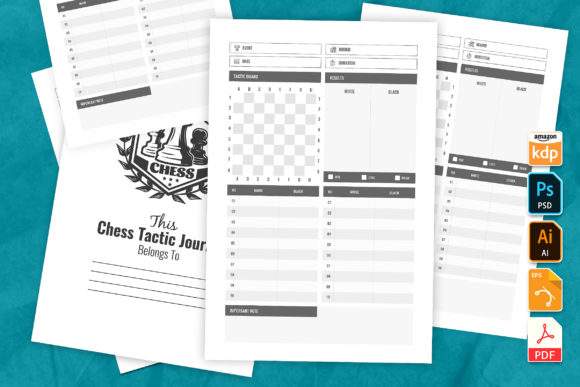
KDP Interior - Chess Tactic Journal
For chess enthusiasts and players dedicated to improving their game, a structured approach to analysis is non-negotiable. The KDP Interior - Chess Tactic Journal is a meticulously designed tool created specifically for this purpose, offering a professional and organized way to dissect your matches, study tactics, and track your progress over time. This isn't just a notebook; it's a dedicated tactical companion that helps you move from casual play to strategic mastery.
This particular journal interior is engineered with the needs of Amazon KDP publishers and chess lovers in mind. It belongs to the page, providing a personal space for ownership, which is a thoughtful touch for a product meant to be used repeatedly. The design focuses on clarity and functionality, ensuring that your notes on chess tactics are easy to review later. Every element, from the layout to the font choices like Montserrat and Oswald, is selected to enhance readability and maintain a clean, professional aesthetic that mirrors the seriousness of the game.
Features Designed for Ease and Professionalism
The true value of this KDP interior lies in its comprehensive features, which streamline the publishing process and elevate the end-user experience. It is a complete design asset, ready to be transformed into a polished product.
- Ready for Amazon KDP: The files are formatted to meet Amazon's specifications, ensuring a smooth upload without technical errors. This saves significant time and hassle for publishers.
- Multiple Page Count Options: You receive PDF files for 50, 100, 120, 150, and 200 pages. This flexibility allows you to create journals of varying lengths to suit different customer preferences or price points.
- Fully Editable Source Files: Included are the original Adobe Illustrator (.ai) and Encapsulated PostScript (.eps) files. This is a crucial feature for designers who wish to customize the interior, adjust layouts, or rebrand the journal to fit a specific vision.
- Standard KDP Size: The popular 6 x 9-inch trim size is used, which is a comfortable and widely accepted format for journals and notebooks, balancing portability with sufficient writing space.
- Creative and Functional Design: The interior features a clean, modern typography layout that avoids clutter. The use of sans serif fonts like Montserrat for headings and body text ensures high legibility, which is essential for a journal meant for quick note-taking during or after a game.
Practical Applications for Chess Improvement
How you use this tactical journal can significantly impact your chess development. Here are some practical ways to leverage its structure:
- Post-Game Analysis: After each match, record the key moves, critical moments, and alternative lines you considered. The structured pages help organize your thoughts systematically.
- Tactic Puzzle Study: Use the pages to work through chess puzzles from books or apps. Write down the problem, your solution process, and the correct answer.
- Opening Preparation: Dedicate sections to studying and noting down your preferred opening sequences, variations, and the strategic ideas behind them.
- Progress Tracking: By consistently using the journal, you create a tangible record of your learning journey, making it easier to identify patterns in your mistakes and track improvements in your tactical vision.
Tips for Customization and Branding
If you are a publisher or designer looking to create a unique product, the editable source files offer immense creative freedom. To maintain the journal's professional appeal while making it your own, consider these tips:
First, ensure any font changes prioritize readability. While script or handwritten fonts have their place in design, the core of a tactical journal must remain highly legible. Stick with clean sans serif or modern serif typefaces for the main content. Second, if you alter the color scheme, maintain a high contrast between text and background to avoid eye strain during long study sessions. Finally, consider your target audience. Are you designing for advanced players who might appreciate a more minimalist design, or for beginners who could benefit from more instructional cues? Aligning the design with the user's skill level enhances the product's usefulness and strengthens its brand identity within the chess community.
Ultimately, a well-executed design asset like this does more than just look good—it serves a functional purpose that can genuinely help users achieve their goals. The right interior design transforms a simple notebook into a trusted tool for growth, making it a worthwhile consideration for anyone serious about publishing or personal use in the world of chess.